Atenció, obert el termini d’inscripció

PROVES ACCÉS A CFGM I CFGS ENSENYAMENTS ARTS PLÀSTIQUES I DISSENY 25/26

RESOLUCIÓ de 18 de febrer de 2025, de la Direcció General de Centres Docents, per la qual es convoquen les proves d’accés per a l’alumnat que no estiga en possessió dels requisits acadèmics d’accés als cicles formatius de grau mitjà i grau superior de les ensenyances professionals d’Arts Plàstiques i Disseny per al curs acadèmic 2025-2026

ANNEX I: Calendari de la prova sense requisits acadèmics d’accés/Horari de la prova sense requisits acadèmics d’accés https://dogv.gva.es/datos/2025/02/25/pdf/2025_3282_va.pdf


Revista Cap i Cua

Us deixem la revista Cap i Cua corresponent al segon trimestre per a que tingueu un tast de tot allò que ha passat en el Chabàs durant aquest període.

També podeu visitar el nostre Arxiu per a informar-vos del que ha passat en altres moments. Perquè no sabem qui som si no sabem d’on venim…


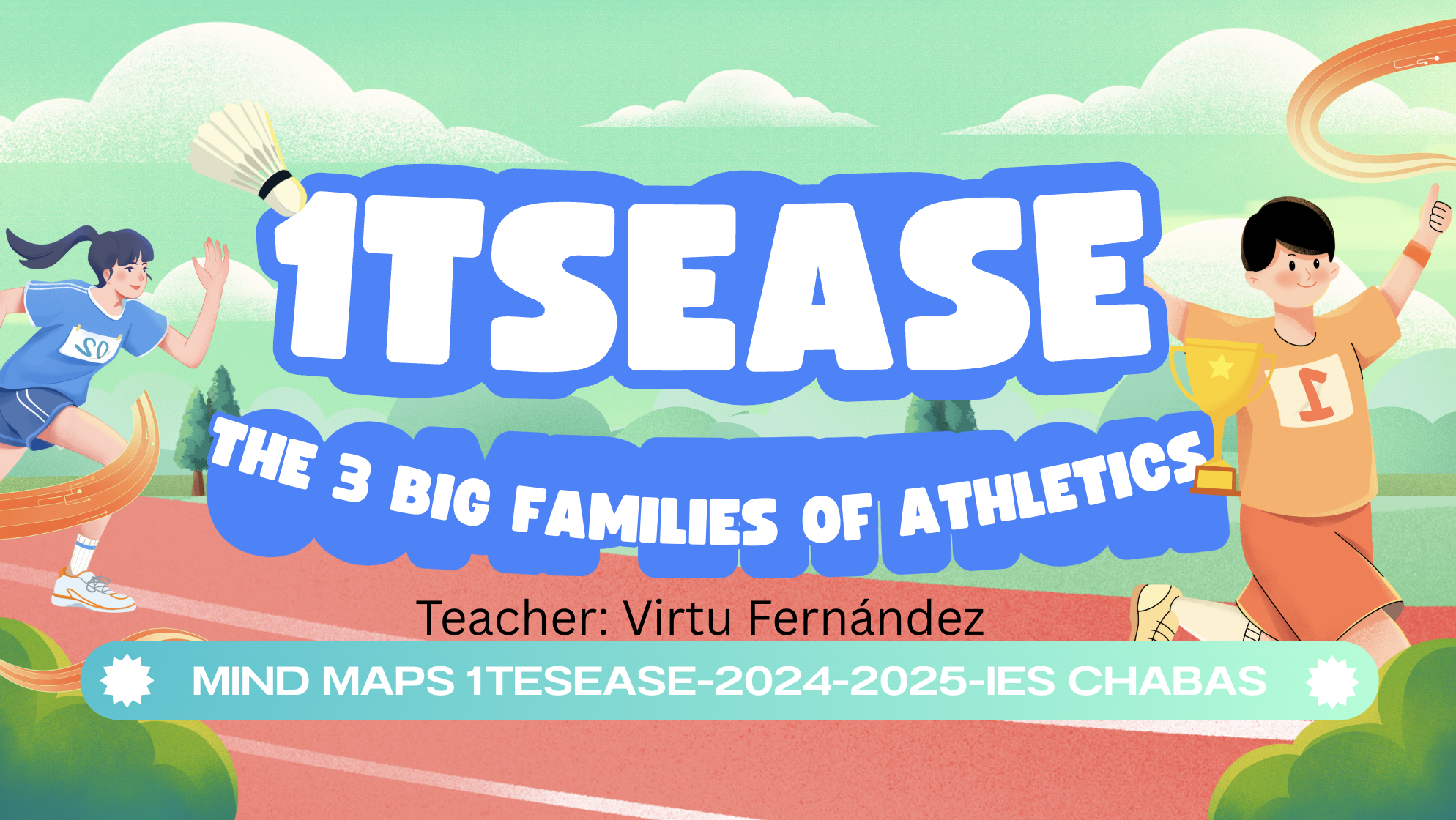
Mind map: The Three big families of Athletics

Our 1TSEASE students of the 2024-2025 course, guided by their English teacher Virtu Fernández, have carried out a very creative mind mapping activity. This time they have not used any electronic device, but they have decided to do it the old fashioned way: with crayons and paper, and the results have been amazing, as you can see in these pictures! Congratulations guys!

To see the pictures, click on the headline on this story.

EASTER

What is Easter?

Easter is a very important festival in the Christian religion, and many Christians go to church at this time. Easter also celebrates the arrival of spring, and we see lots of things that make us think of new life, for example eggs, chicks, flowers and rabbits.  

When do people celebrate Easter?

The dates of Easter change from year to year, but it’s usually sometime between the end of March and the end of April. In some countries, people have holidays from school and work, and they often spend time with family and friends.

Easter eggs

Eggs are a big part of Easter celebrations! Many people paint chicken eggs and decorate them with bright colours, and a lot of children receive chocolate eggs as presents. There are many different Easter egg traditions around the world.

In the UK, as well as many other countries, children have fun taking part in Easter egg hunts. They look for chocolate eggs in parks and gardens. The eggs are hidden by the Easter bunny!

In some places, people have egg-rolling competitions. People boil eggs to make them hard, then they paint them. You have to roll your egg down a hill and not break it! 

In some parts of Mexico, people fill empty eggs with confetti. When you break the egg over someone’s head, the colourful shower of confetti is supposed to bring them good luck.

Other Easter traditions

In Sweden and Finland, children dress up as ‘Easter witches’. They put on costumes and go to their neighbours’ houses and give them Easter greetings. The neighbours give them sweets or chocolate in return.

In the USA, the UK and Australia, many schoolchildren make special hats called ‘Easter bonnets’ at Easter time. They decorate a hat with flowers, eggs and other colourful things. They wear their hats and walk around, and there is often a prize for the best hat.

In Bermuda, two days before Easter Sunday, on Good Friday, children and adults fly kites. Some people buy their kites, and others make the kites themselves.

Happy Easter!

People celebrate Easter in lots of different ways around the world. Some of the traditions are religious, others celebrate spring and many are about having fun and eating chocolate eggs! Happy Easter! 

Easter is coming!

Proves llengües curs 2024-2025

Proves homologades de nivell bàsic de llengües estrangeres (A2)


Calendari de les proves:

Presentació de sol·licituds a la provaDel 3 al 15 d’abril
Publicació de les llistes provisionals d’admesos16 d’abril
Esmena de sol·licituds29 i 30 d’abril i 5 de maig
Publicació de les llistes definitives d’admesos6 de maig
Realització de la prova d’ALEMANY12 de maig (11:00)
Realització de la prova d’ANGLÉS14 de maig (11:00)
Realització de la prova de FRANCÉS13 de maig (11:00)
Publicació provisional de les qualificacions21 de maig
Reclamacions a les qualificacionsDel 21 al 23 de maig
Publicació definitiva de les qualificacions 27 de maig

Important! Per poder fer les proves és imprescindible que la persona aspirant acudisca proveïda del seu DNI original o del seu NIE original, a més d’una còpia de la sol·licitud de participació degudament segellada pel centre.

La publicació de la Guia del Candidat (estructura dels exercicis) es troba a la pàgina web: https://ceice.gva.es/va/web/dgplgm/proves-homologades

Convocatòria en PDF


Horari específic de cada destressa


Proves PAU 2025

Arriba la recta final, ja tenim ací la convocatòria ordinaria de les proves PAU que es duran a terme els dies 3, 4 i 5 de juny. Molts ànims a tot l’estudiantat que les realitza aquest any!

La Conselleria d’Educació, Cultura i Esport ha posat a la nostra disposició aquesta pàgina web amb tota la informació de la convocatòria de les PAU d’aquest curs 2024/2025.

A més a més, ací podeu consultar un PDF amb tota la informació rellevant de l’actual convocatória. I també teniu enllaços a documents i webs que us poden interessar.


Avís de privacitat

Este lloc web utilitza només cookies tècniques necessàries per al seu funcionament. No s’emmagatzemen dades amb finalitats publicitàries ni es comparteixen amb tercers. S’utilitza analítica interna sense cookies, i només es recull la IP amb finalitats de seguretat.

Veure política de cookies