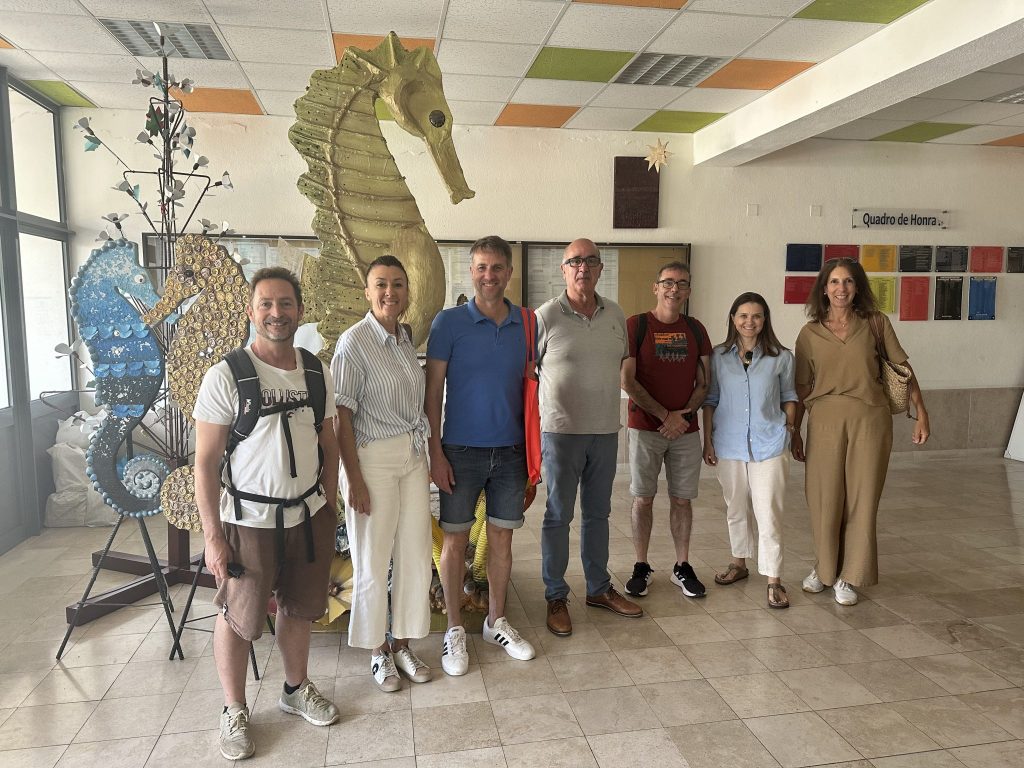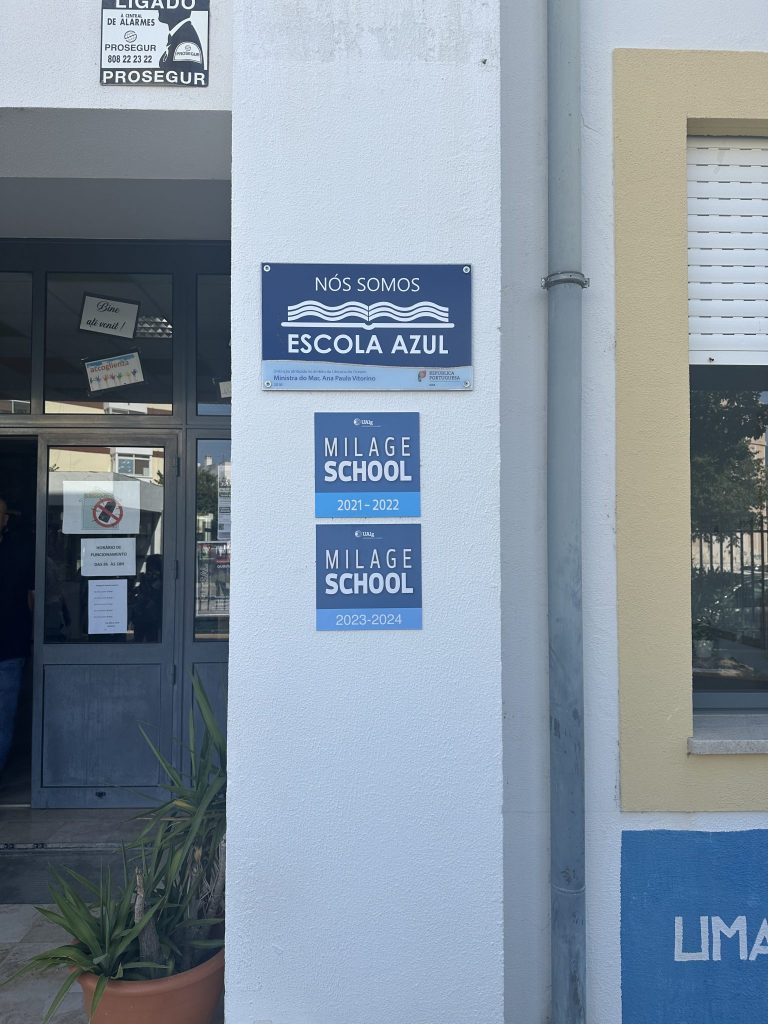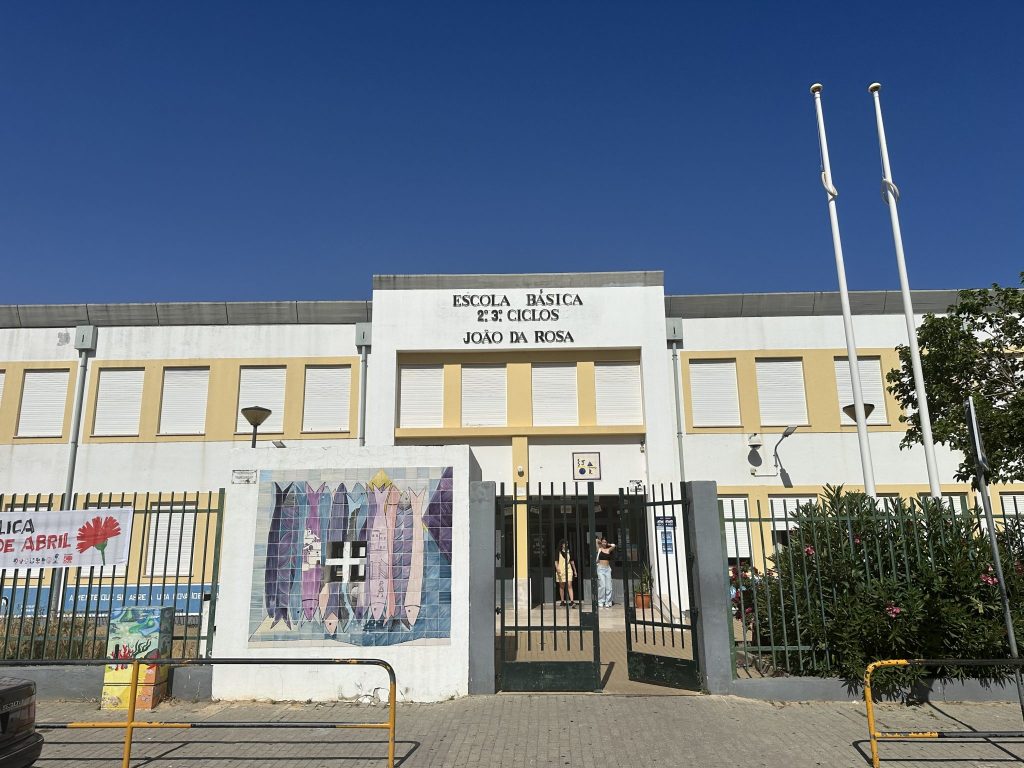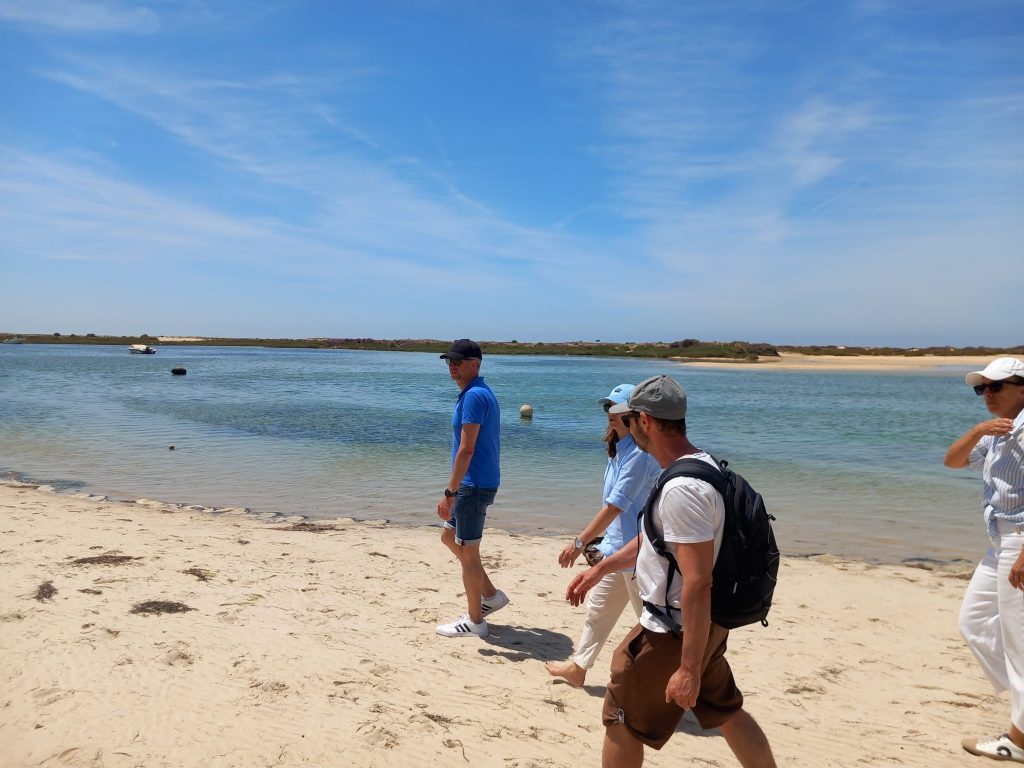
During the week of 3 to 7 June 2024, a Jobshadowing teacher mobility took place in the city of Olhão in Portugal. The trip was carried out within the parameters of sustainable travel, and the transfers were made using more ecological means than flying, such as train and car. The host centre was Agrupamento de Escolas João da Rosa, a school with students aged between 12 and 16 that does excellent work in social cohesion and inclusion within the neighbourhood where it is located. The school is situated near the Parque Natural da Ria Formosa, which allows the students to enjoy a space for work and interaction with nature.
The environmental projects carried out by the educational centre are diverse and closely related to the variety of fauna and flora provided by the Portuguese Algarve.
One of the most prominent actions they are implementing at the centre is the Coastwatch project. This is a European initiative, managed by the Ministry of Education of each European country with a coastal area, which aims to monitor the coastline by collecting data on biodiversity and the litter found in the coastal zone. Groups of schoolchildren are assigned sections of the coast to analyse and collect the litter that accumulates on the beaches. The data is uploaded to a digital platform to track the evolution and types of waste found on our beaches. The Portuguese centre carries out its activities on Armona Island, an area of special ecological and tourist value.
Ultimately, the Erasmus mobility has provided partners who work on different aspects of sustainability and with whom cooperative work can be done, such as in the Coastwatch project. Furthermore, the Agrupamento de Escolas João da Rosa is a clear example of how an educational centre serves to unite and integrate deprived and excluded communities, acting as a foundation for including immigration into host societies and preventing the formation of ghettos.
Obrigado to the colleagues working at the Agrupamento de Escolas João da Rosa in Olhão.