Innovation and Inclusion School Project (PIIE).

From the Blackboard to Space: Innovation in the Design of Inclusive Spaces (2024/2026). First year.
This two-year project aims to stimulate different languages and means of expression within the interdisciplinary projects time and ensure their cross-disciplinary application. To achieve this, we will create a multi-space with various environments where students can explore tasks, activities, and resources in a relaxed atmosphere that encourages learning from mistakes.
Goal 1
To create a multi-space that fosters the stimulation of different languages and forms of expression—oral, written, visual, audiovisual, computational, physical, musical—and supports the development of communication skills.
- To create a range of possibilities within the multi-space that enables students to engage with different realities based on their interests.
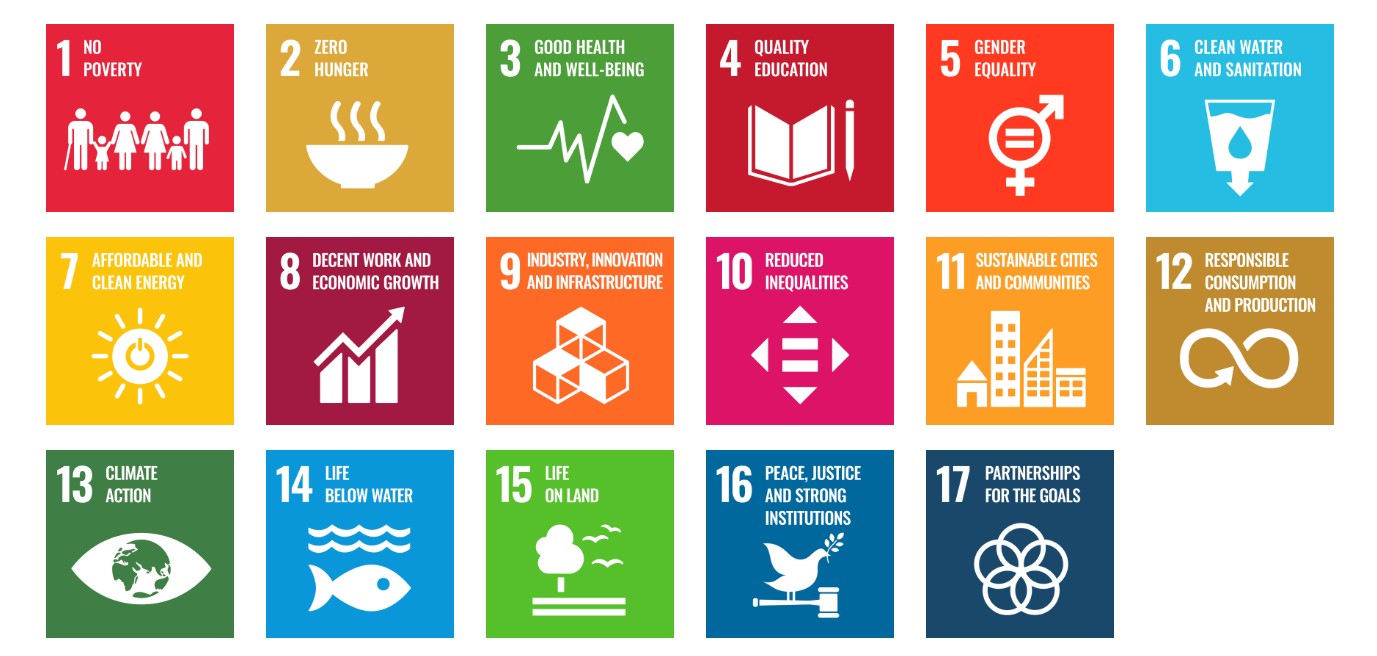
- To use the Sustainable Development Goals defined in the 2030 Agenda as a reference when designing proposals.
- To design the space according to sustainability parameters and ensure it is free from toxins.
- To develop students’ autonomy and decision-making skills for daily life.
- To provide communicative tools to assist in managing emotions and relationships with peers.
The design of a multi-space allows us to enhance the school’s potential, provide resources to students, and integrate reality into the daily life of the school.
Goal 2
To showcase, promote, and connect the school through the work and products made by pupils.
- To achieve a positive impact on the maintenance and growth of both the school and the community.
- To create communication channels between the school and the multicultural and multilingual community.
- To offer students a connection to the environment surrounding the center.
- To promote the use of different vehicular languages (Valencian, Spanish, and English).
- To enhance various forms of non-verbal expression as a means of communication.
The unique features of our school and its close ties with the local community, along with the new curriculum in the Valencian Community, foster firect interaction between learning and real-life situations, creating a meaningful connection between the school and its environment.
These are the spaces:
Reading Spaces
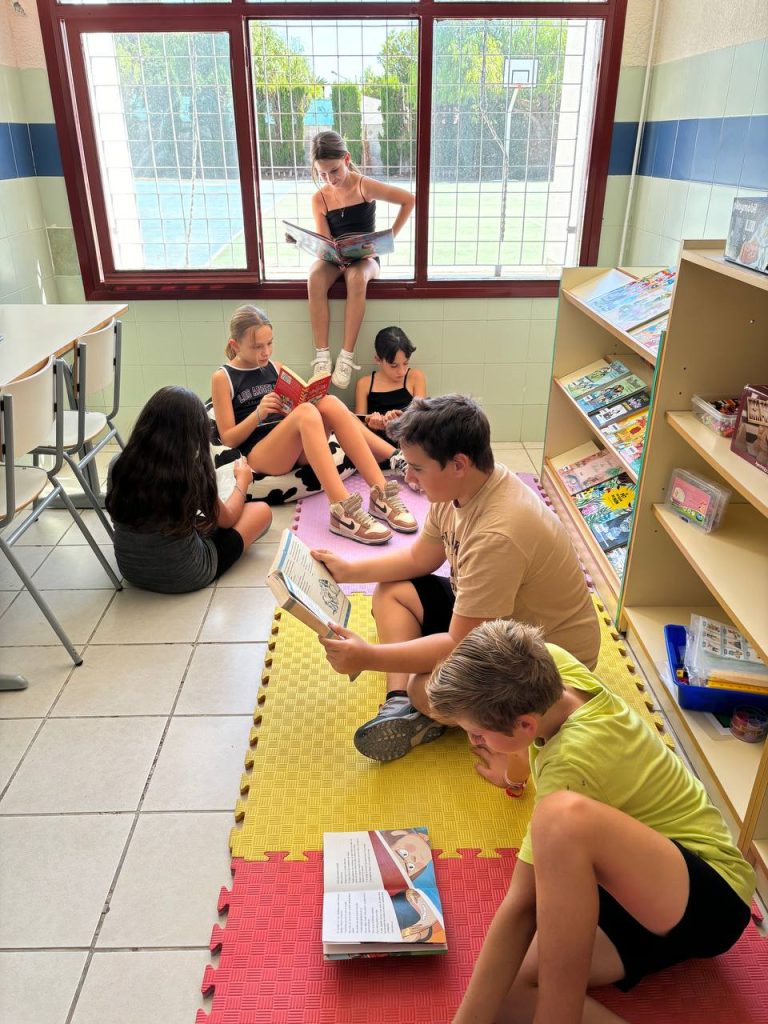
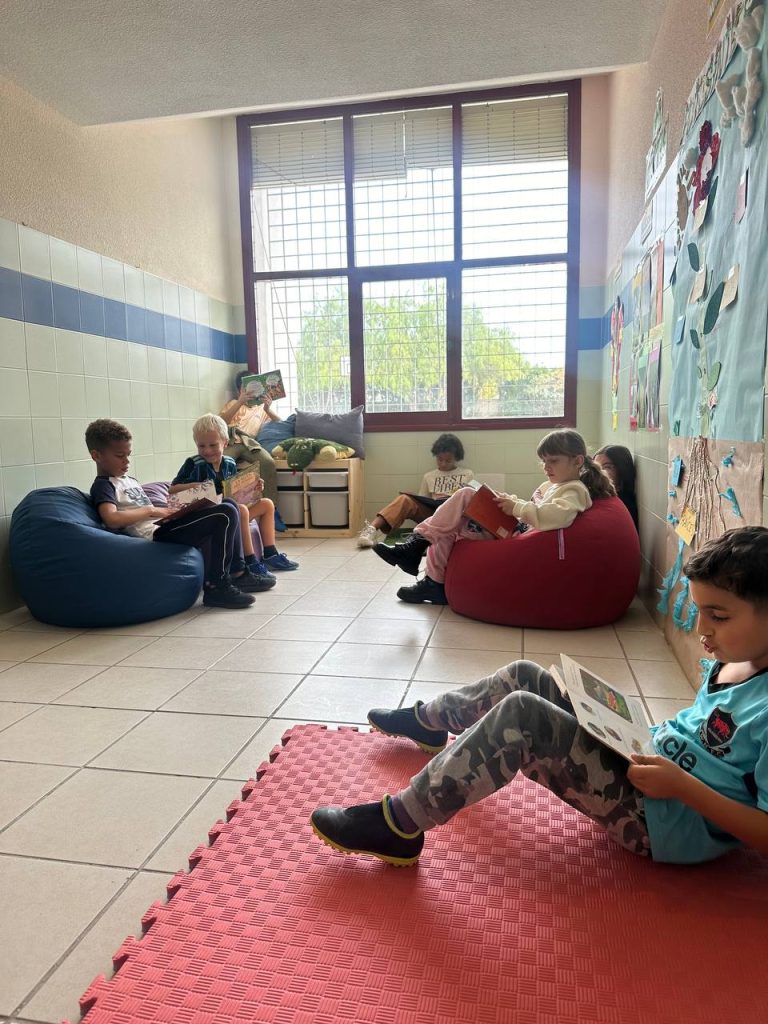
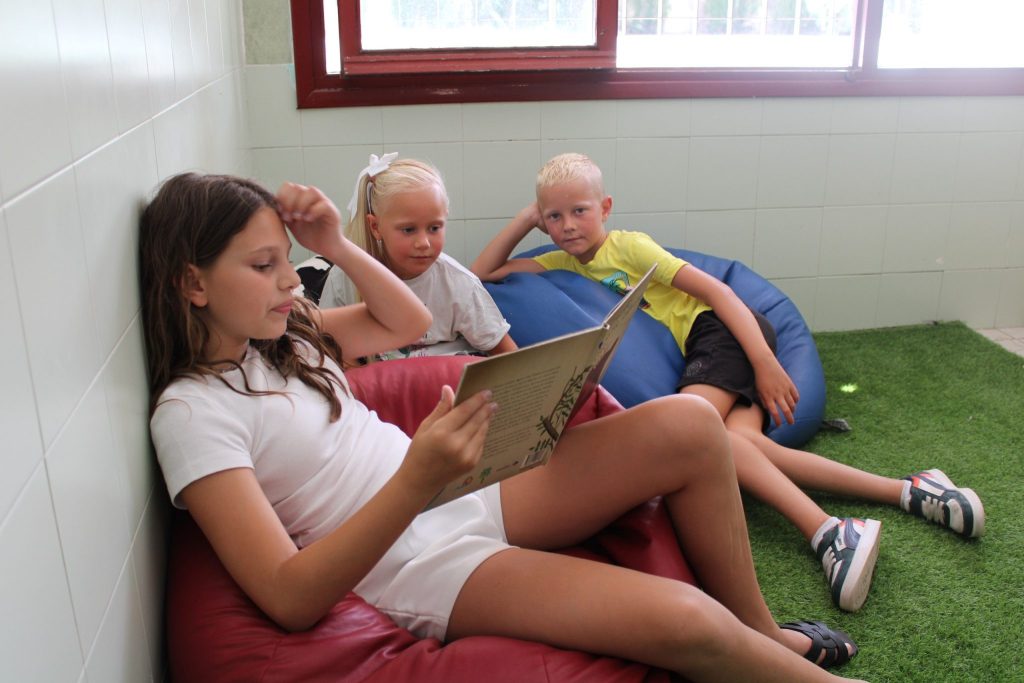
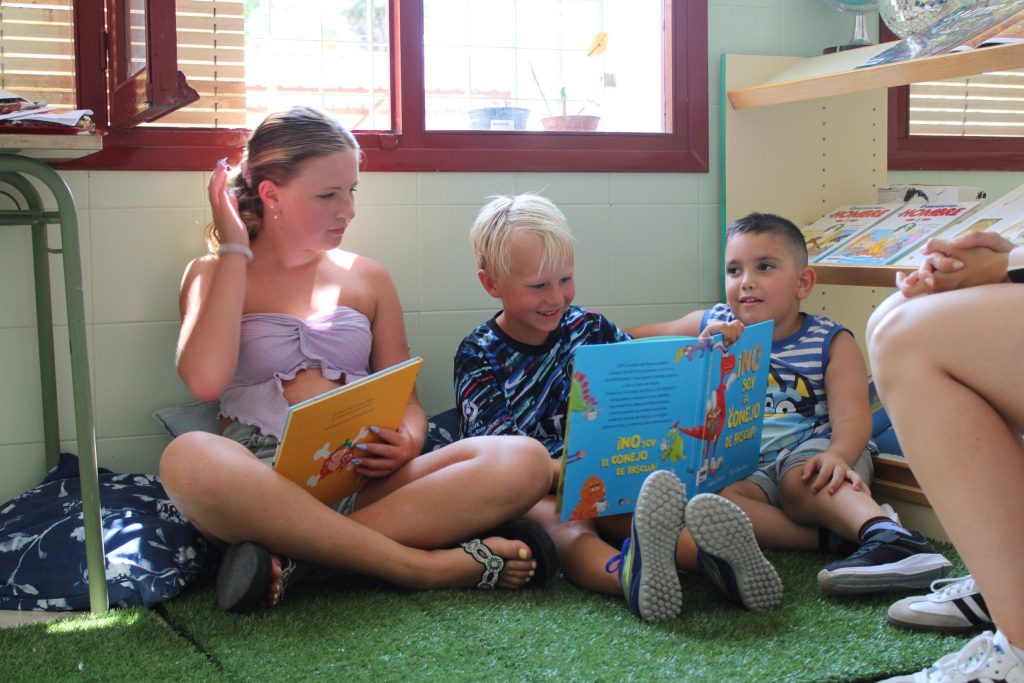
The reading spaces were the first to be transformed. They started out as small, improvised corners between classrooms, in the hallway, with just a few books and a lot of excitement. Little by little, they came to life: we added colour with grass, beanbags, pillows, and shelves full of stories and games. That’s how a cosy space was born—one that invites you to sit, read, explore board games, or simply enjoy a calm conversation. Now, when someone walks by, it’s common to hear laughter, focus, or a shared, comfortable silence. It’s no longer just a place you pass through—it’s a place to connect.
Mathematical-Computational Space
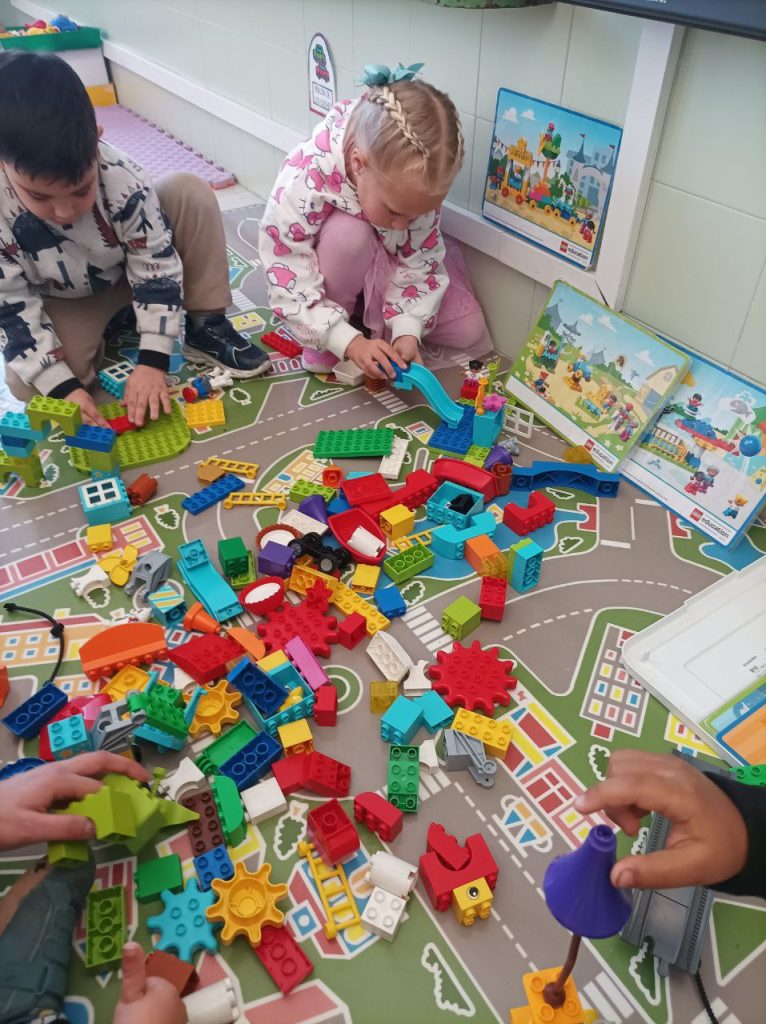
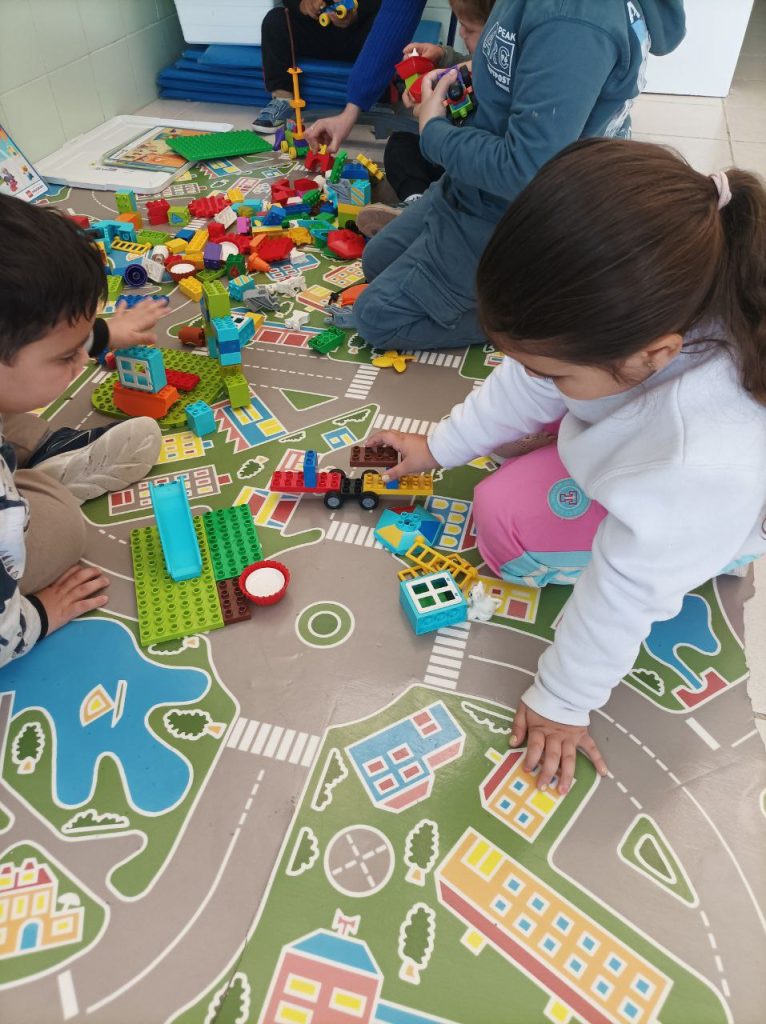

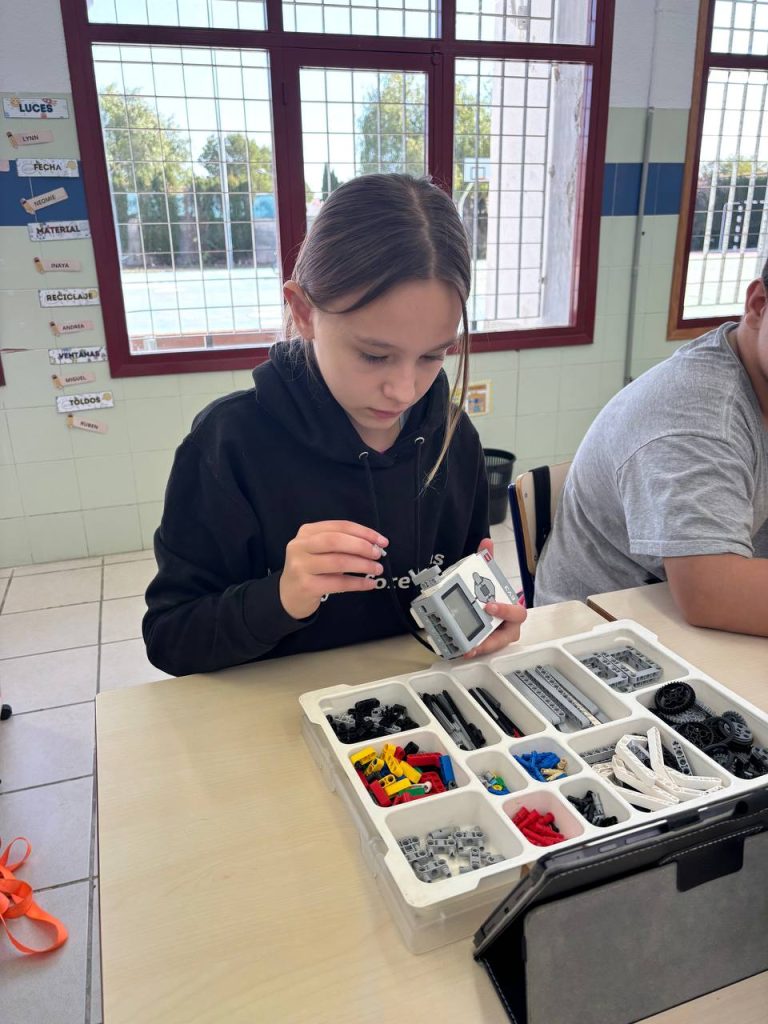
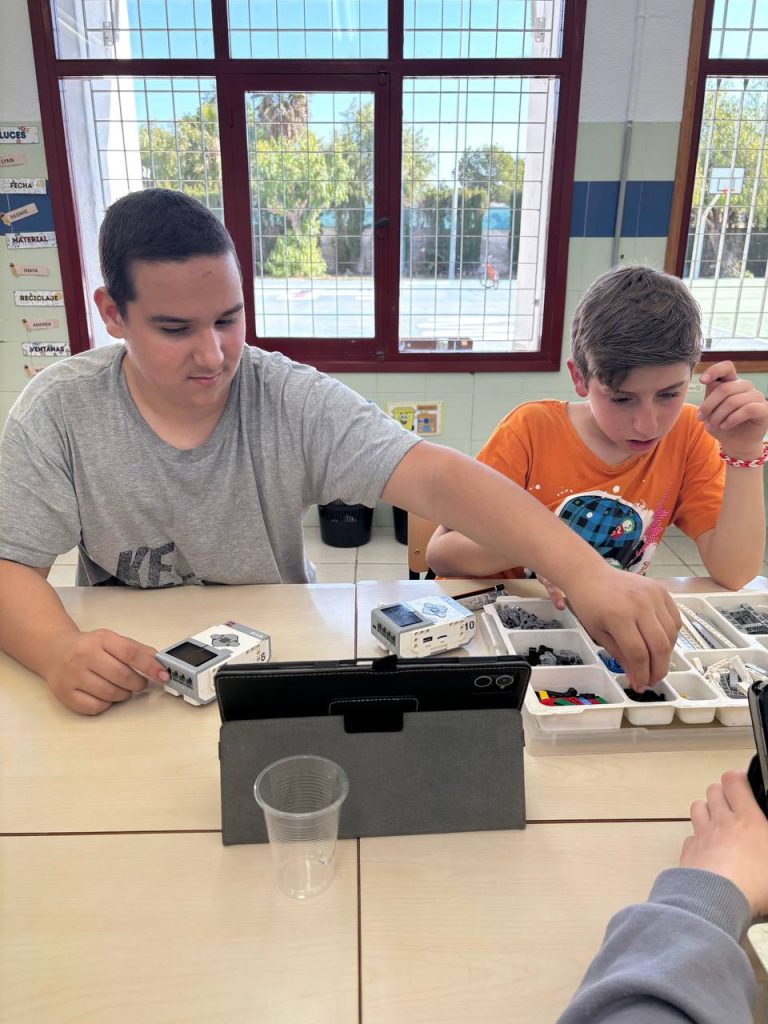
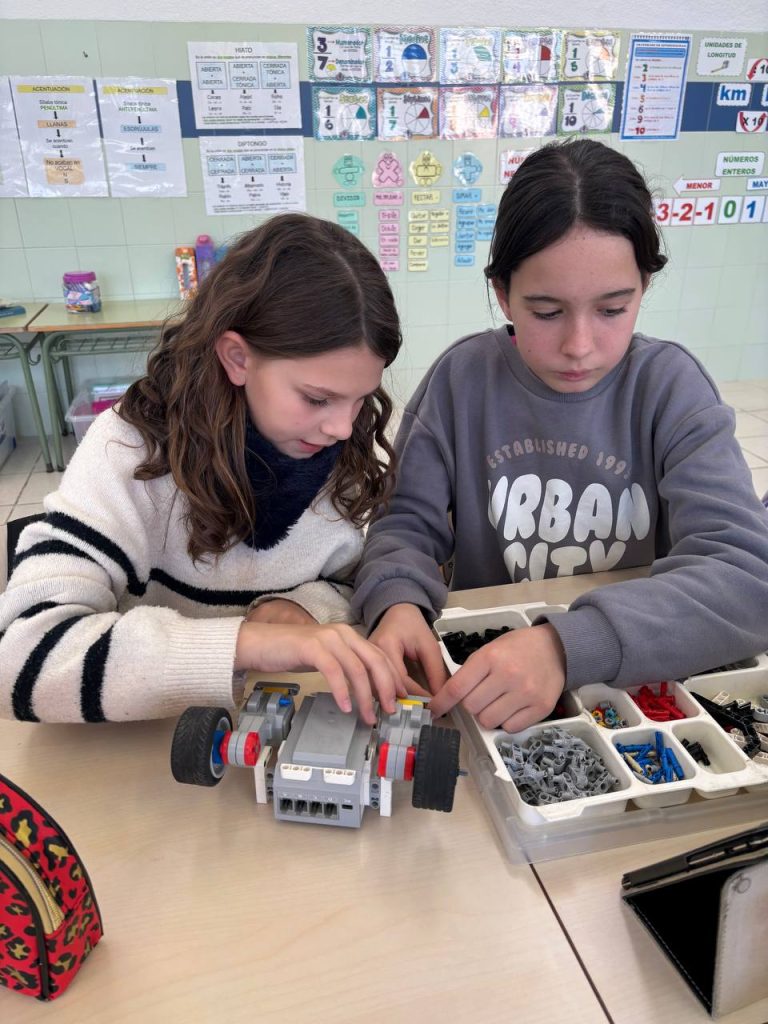

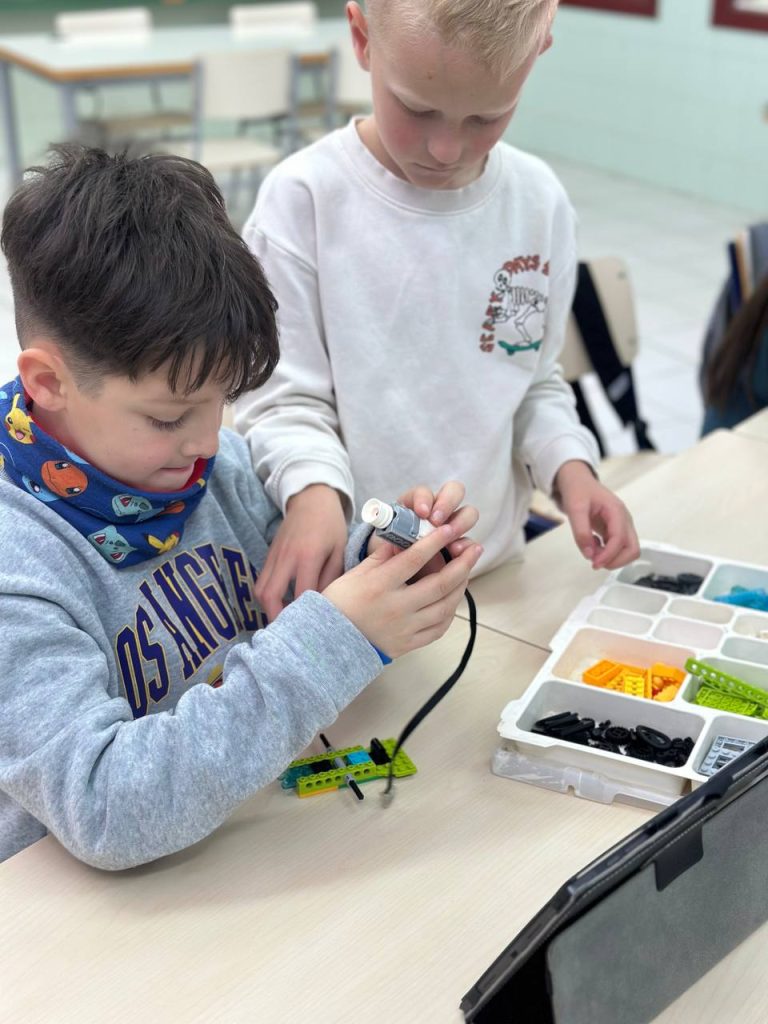
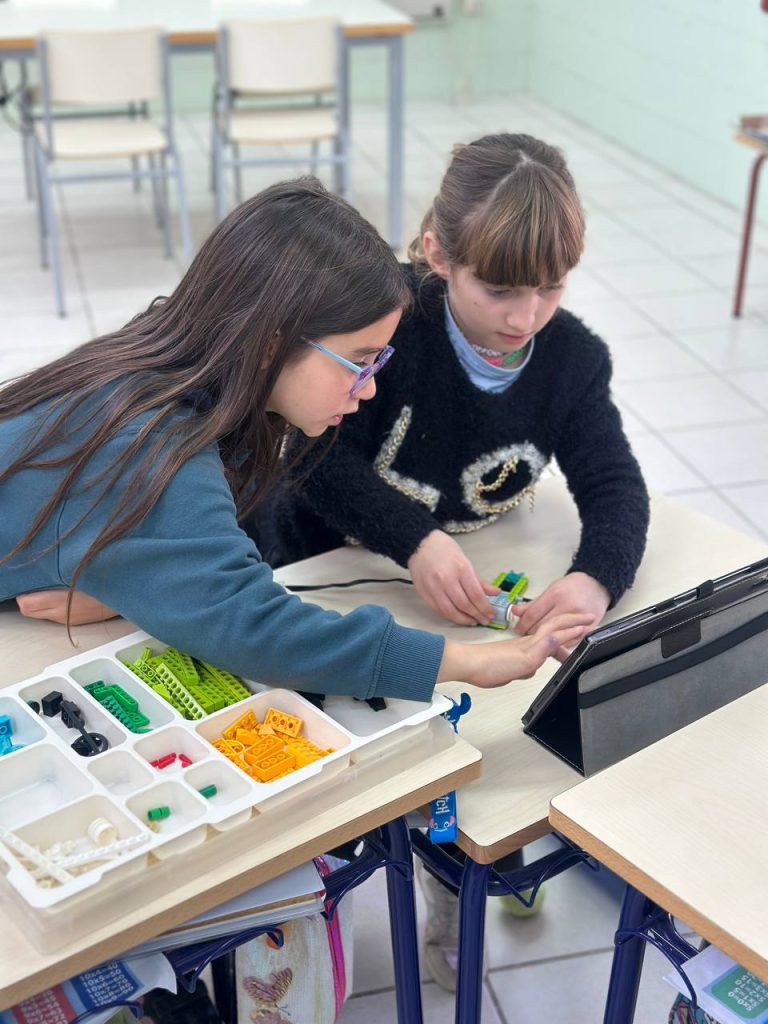
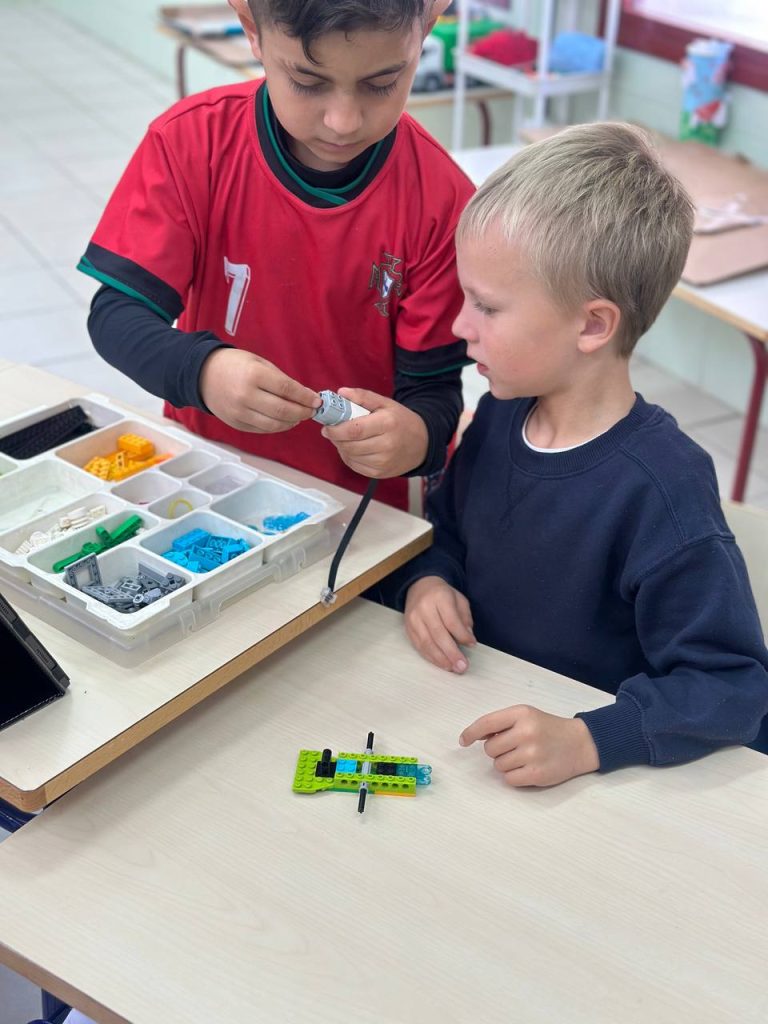
The math-computational space can’t be found on a school map—it has no walls or fixed corner. It’s made of moments: a spark of wonder when a robot moves for the first time, a silent chess match where everyone is deep in thought, a Scratch code that finally works after many tries. With the help of external specialists who guided us through the workshops, we’ve discovered new ways of thinking, creating, and solving. Workshop by workshop, challenge by challenge, we’ve built a different approach to understanding math and technology—through curiosity, play, and the drive to go just a little bit further.


Audio-Visual Space
The Audio-Visual Space is a doorway to imagination. It has no fixed rules or limits—just the desire to create. With a giant green screen as a stage, cameras that capture dreams, a trusty tripod, and a dressing room full of costumes and props, anything is possible. Here, students don’t just learn—they perform, invent, and direct. We’ve already filmed the pilot episode of Traveling Through History (Viajando por la Historia in Spanish) —a journey to the Middle Ages that left us eager for more. In this space, creativity isn’t just an activity—it’s a shared adventure.
SDG
Sustainable Development Goals
This PIIE has received funding from the department responsible for education at the Generalitat. All content published on this page is shared under a Creative Commons Attribution-ShareAlike 4.0 International license. If you publish the project or any educational resources created, including any derivative works, it must be done under the same license, with a note of any modifications made, and a link to this page as a reference for the original project and its authorship.