


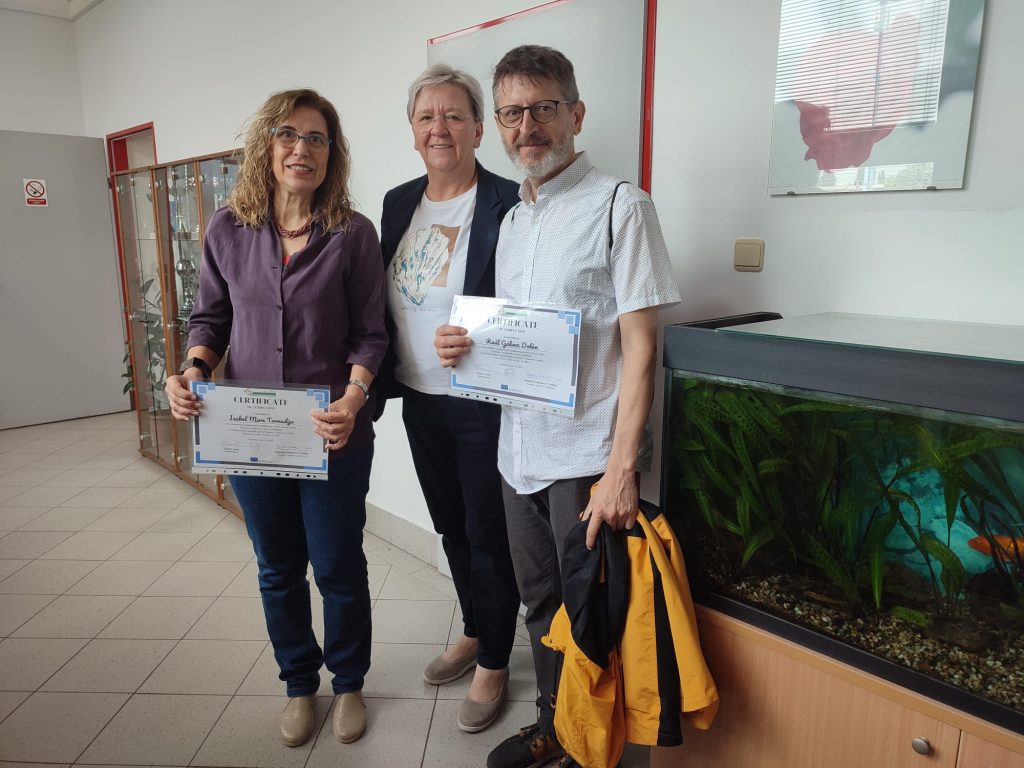
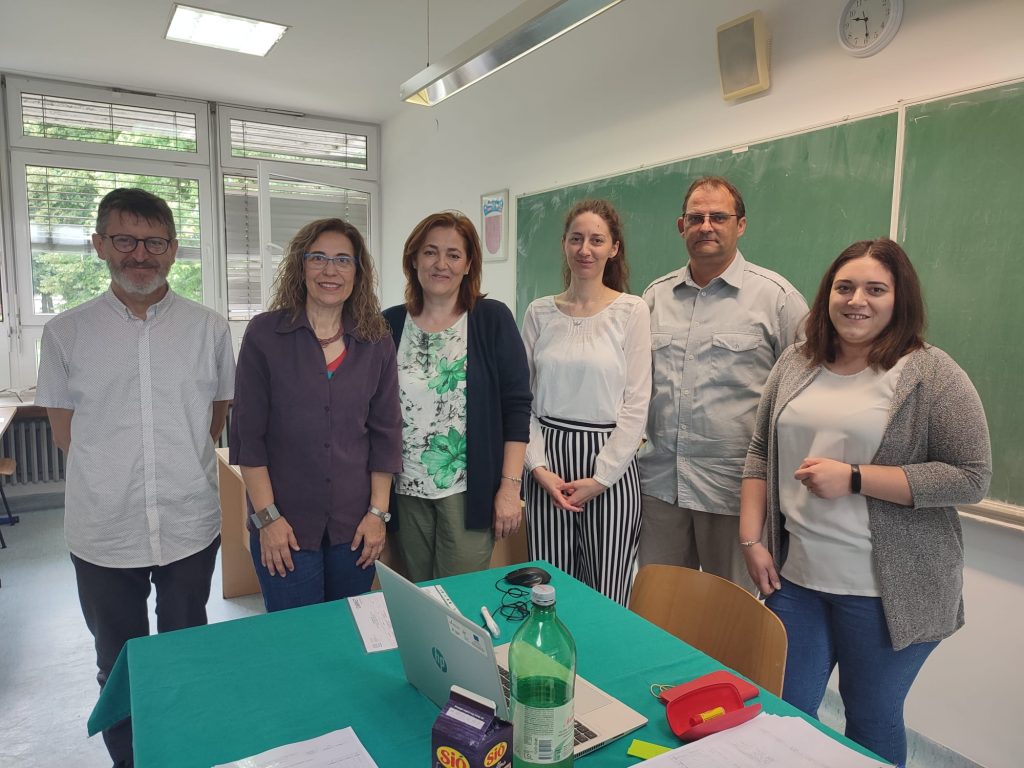
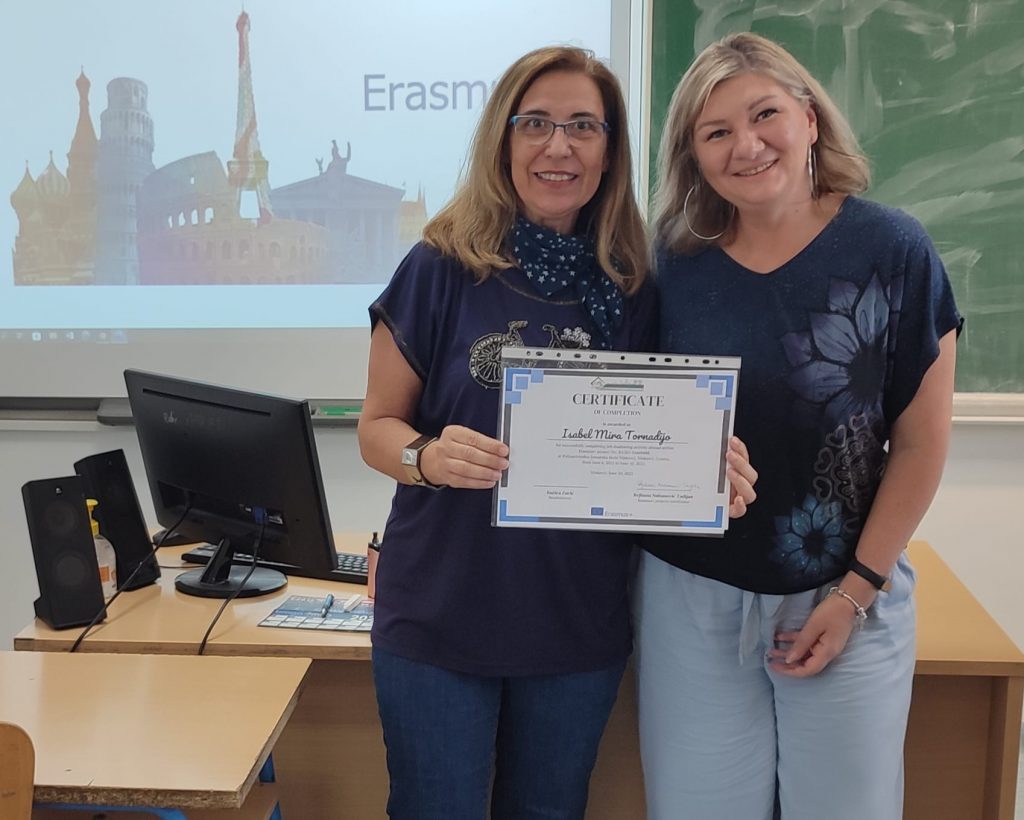
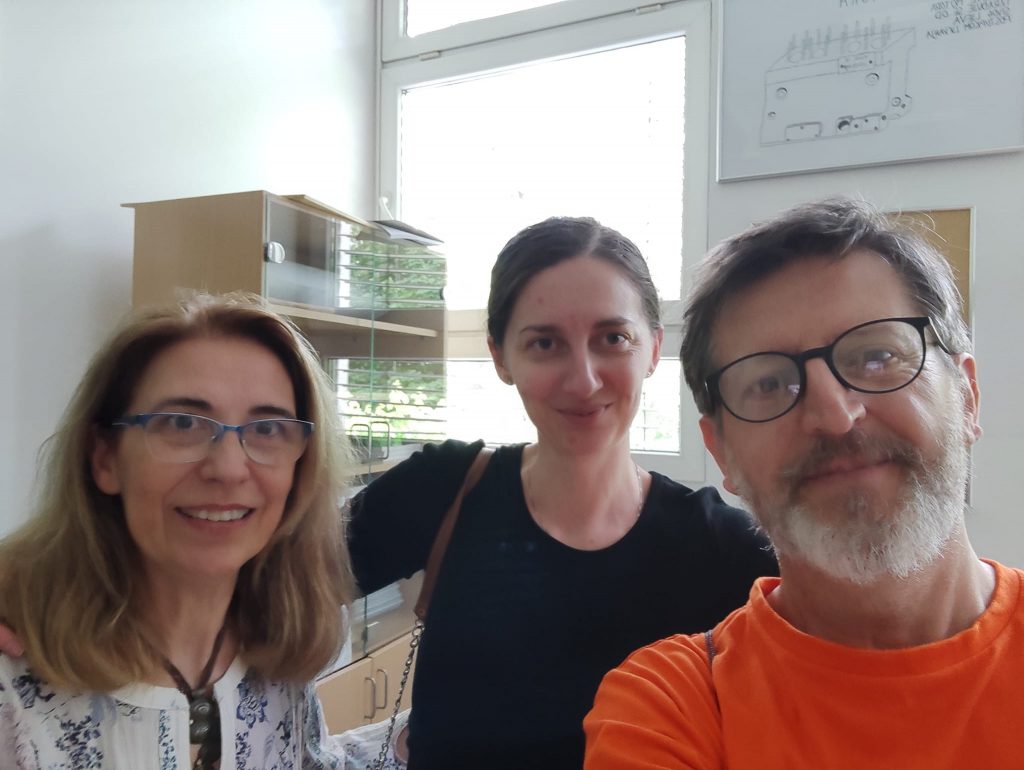
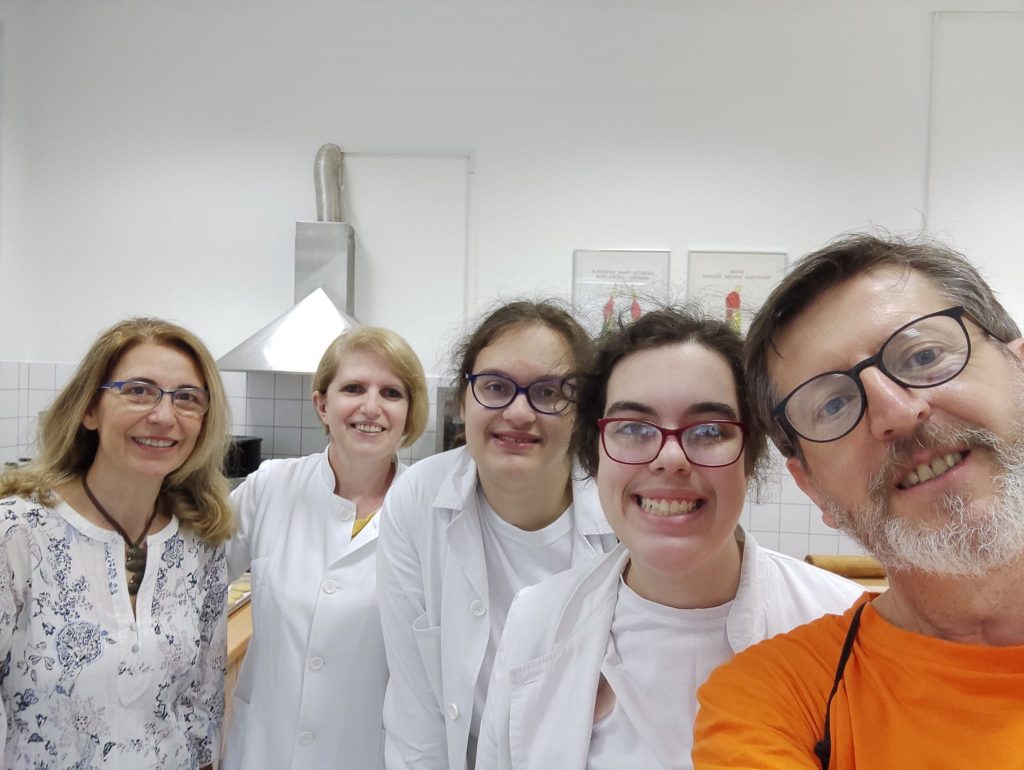
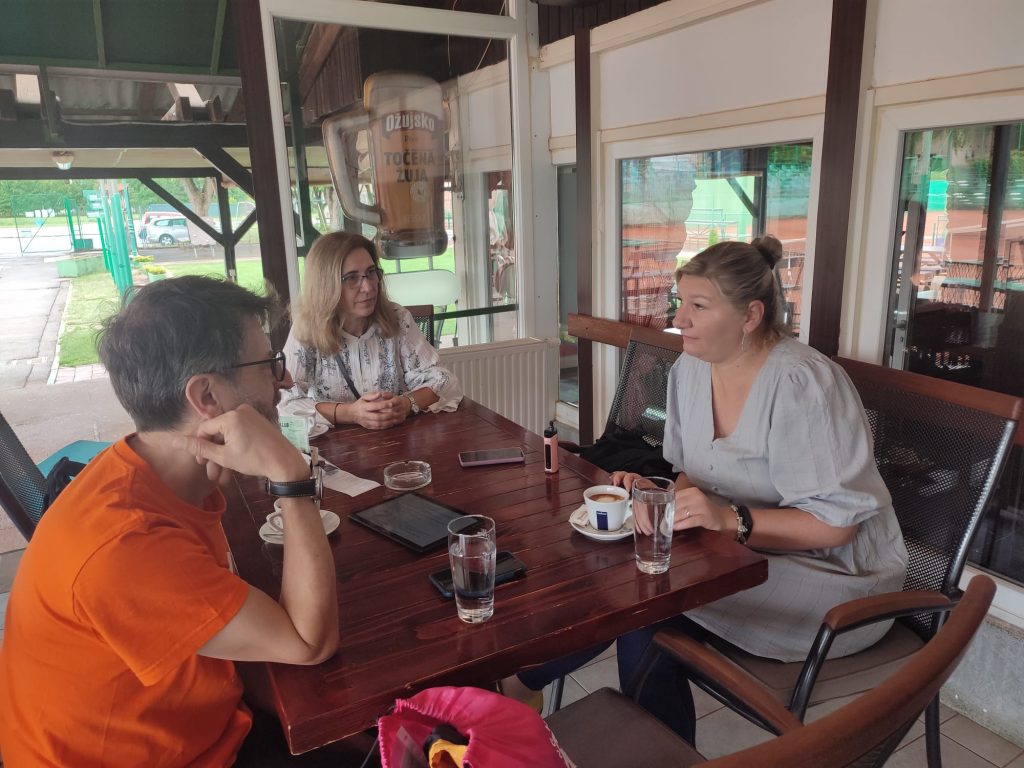
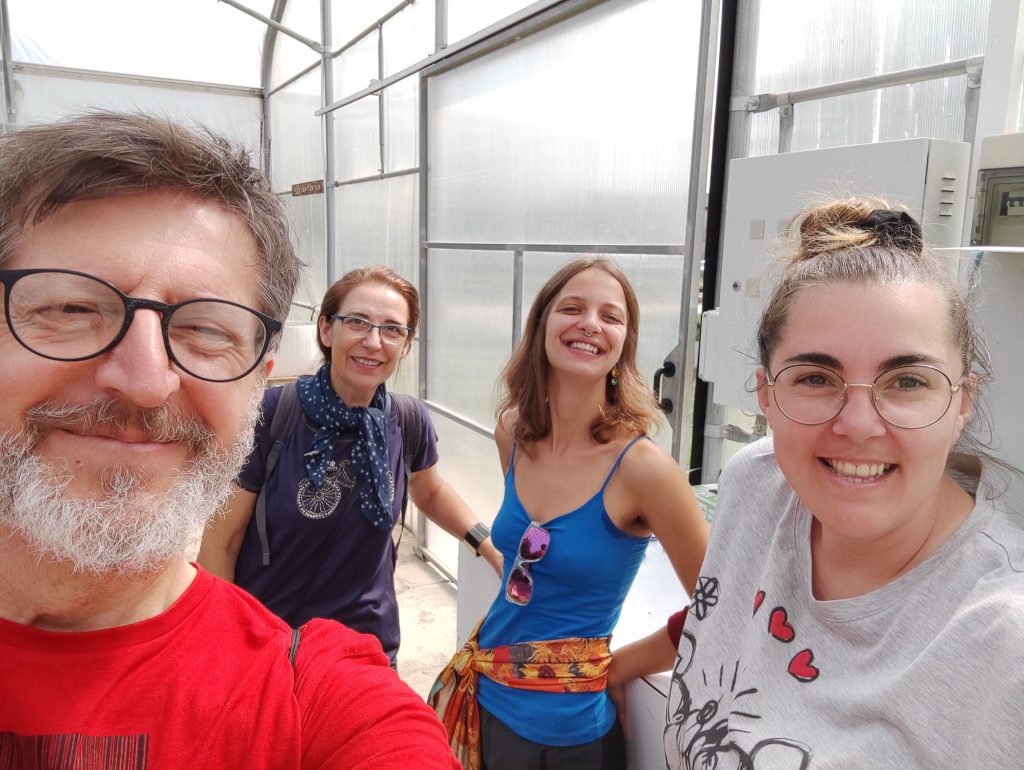
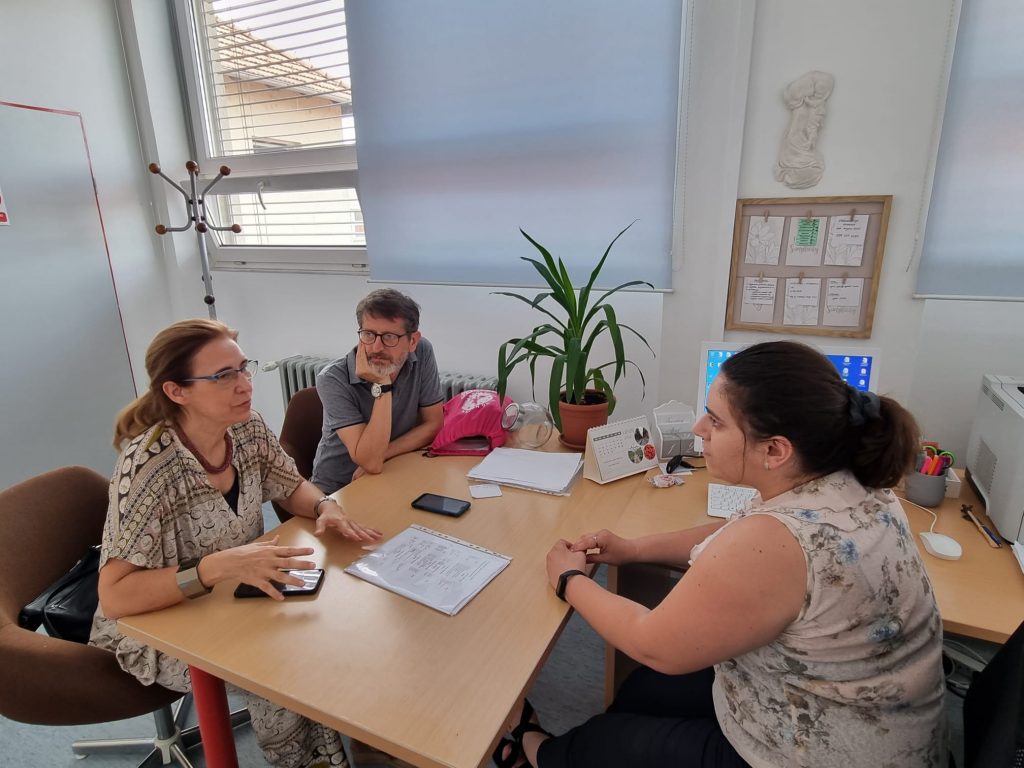
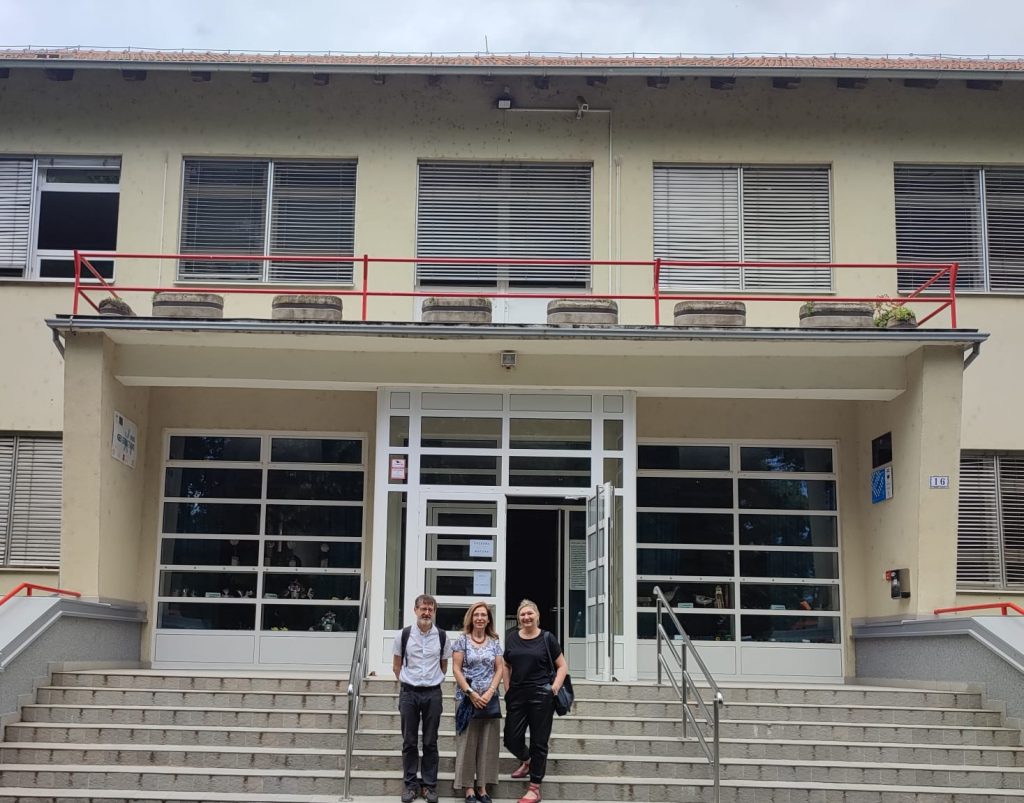
ISABEL MIRA (HEAD TEACHERS and PHYSICS department) and I, RAUL GALVEZ (ARTS department) carried out a mobility, within the centre’s Erasmus+ project, to Vinkovci, Croatia, where we were living the day-to-day life of Poljoprivredno šumarska škola, Agricultural and forestry vocational training school 6th to 10th June, 2022.
Poljoprivredno šumarska škola is located in the Croatian town of Vinkovci, Vukovar-Srijem County, which has about 35,000 inhabitants. The families of the students of the centre are usually low-income and dedicate themselves to agriculture, hunting and livestock, but few of them decide to enter the school since they have the basic knowledge of the family tradition. The centre has hydroponic planting facilities in greenhouses, seedbeds, vineyards, orchards, raised terraces, forestry facilities around the city, all with the aim of providing the highest quality education for its students.
The school has students from ages 15 to 19: agrotechnician, forestry technician, agricultural technician in phytopharmacy, agricultural machinery mechanic, florist, baker, butcher, farmer, gardener and also students with special non-physical needs (baker and gardener).
Students complete their education with matura (leaving exam) or mature državna (state level exam) if they want to enter university.
The goal of the school is to attract the majority of farmers in the area and provide them with skills that they can use later, as well as business and market knowledge, in the areas where they are relevant, and adaptation to new technological skills. They have 360 students and 34 groups, 15% of them with special needs. The duration of the studies is 3 or 4 years depending on the specialty.
The management of the school is legally entrusted to a team of 7 members (2 faculty representatives, 1 family, 1 student and 3 representatives of the founders, including a secretary), headed by the director/principal Ružica Zucić, B.Sc. The director does not have classes, responsible for organization, financing and administration and she was a teacher 25 years before the role that she occupies.
Depending on the specialty they have more boys than girls, but in floristry they have more girls. In bakery and phytopharmacy they are the same, in mechanics they are all boys… In agrotechnics they have 60% boys and in forestry they have 80-90%. In butcher almost all boys.
● They do not have a fixed schedule, they generally work in two shifts.
● They do not have mediation groups, for interventions there is a school pedagogue and a psychologist.
● They teach English and German as a foreign language.
● They have wifi and projectors in almost every classroom, every teacher has a laptop. For
English/Math/Physics/Biology/Chemistry there are specialist classrooms as well as a kitchen for bakers. In the school garden there are many machines and greenhouses with the latest technology and where they make apple chips, juices, vinegar, wine, compotes and jams, cosmetic creams…
● They have 60% general education (English, Mathematics, History, Physics, Chemistry, Biology focused on agriculture) and 40% vocational subjects.
● There are usually no behavior problems, in case of sanction they do social services.
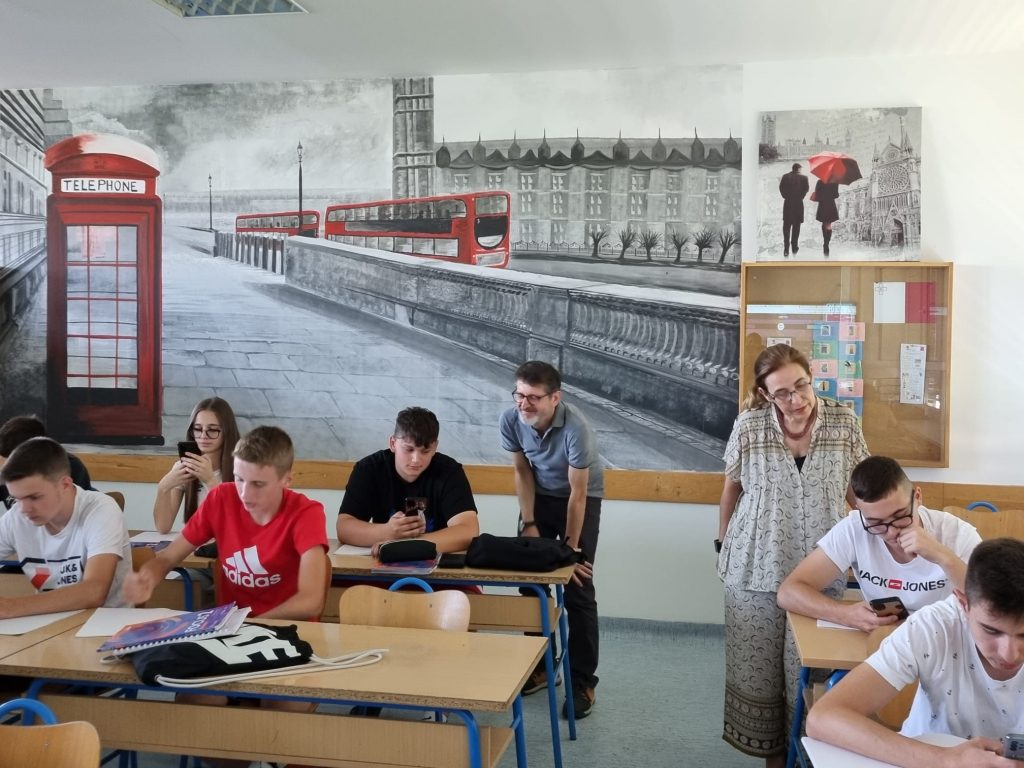
Through our stay at the Poljoprivredno šumarska škola the following facts caught our attention: in all the classrooms there is a sink and a sponge in a corner to clean the blackboard and the students do it voluntarily, they enter class after the teacher, and they usually carry a mobile phone that they leave on the table next to the blackboard in some subject, when they have to collect data dictated by the teacher, they write in A5 notebooks, the counselor enters the classrooms to improve teaching, the use of an extracurricular
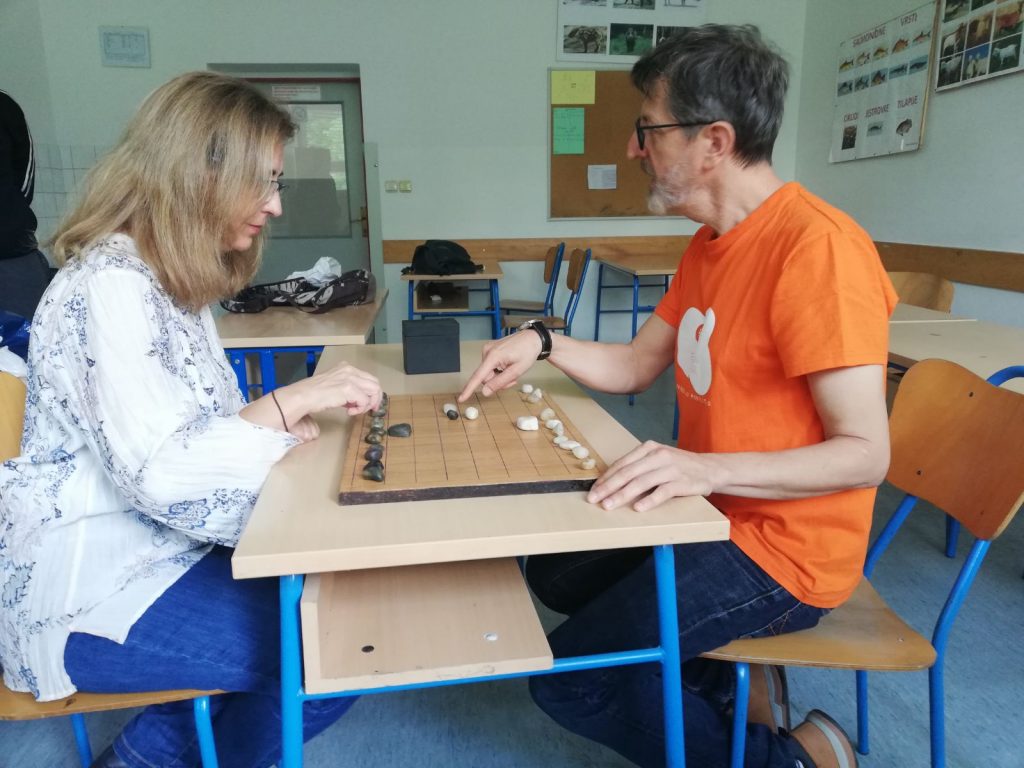
program (latrunculi game) to help students with grade problems, the great diversity of products they can produce and of which they sell the surplus, the number of Erasmus projects that the coordinator can carry out, at the time of the visit they have an Erasmus student from Valencia on a 3-month stay to whom we do a short interview and another day she shows us the horticultural installations, Physics class there is a moment that they dedicate to first aid and they bandage each other’s hand, there is an annual first aid contest.
During this time we were really welcomed by the entire Croatian school community who taught us the whole system with all their love, we feel fully grateful.
Isabel Mira &
Raul Galvez
ISABEL MIRA (DIRECTORA DEL DEPARTAMENTO DE FÍSICA) y yo, RAUL GALVEZ (DEPARTAMENTO DE ARTES), realizamos una movilidad, dentro del proyecto Erasmus+ del centro, a Vinkovci, Croacia, donde conocimos la vida cotidiana de la Poljoprivredno šumarska škola, una escuela de formación profesional agrícola y forestal, del 6 al 10 de junio de 2022.
La Poljoprivredno šumarska škola se encuentra en la ciudad croata de Vinkovci, en el condado de Vukovar-Srijem, con unos 35.000 habitantes. Las familias de los alumnos del centro suelen ser de bajos recursos y se dedican a la agricultura, la caza y la ganadería, pero pocos deciden ingresar en la escuela, ya que conocen la tradición familiar. El centro cuenta con instalaciones de cultivo hidropónico en invernaderos, semilleros, viñedos, huertos, terrazas elevadas e instalaciones forestales en toda la ciudad, todo con el objetivo de brindar una educación de la más alta calidad a sus estudiantes.
La escuela cuenta con estudiantes de 15 a 19 años: agrotécnico, técnico forestal, técnico agrícola en fitofarmacia, mecánico de maquinaria agrícola, florista, panadero, carnicero, agricultor, jardinero y también estudiantes con necesidades especiales no físicas (panadero y jardinero).
Los estudiantes completan su educación con el examen de fin de estudios o el examen estatal si ingresar a la universidad.
El objetivo de la escuela es atraer a la mayoría de los agricultores de la zona y brindarles habilidades que puedan aplicar posteriormente, así como conocimiento empresarial y de mercado en las áreas donde sean relevantes, y adaptación a nuevas habilidades tecnológicas. Cuenta con 360 estudiantes y 34 grupos, el 15% de ellos con necesidades especiales.
La duración de los estudios es de 3 o 4 años, dependiendo de la especialidad. La gestión de la escuela está legalmente a cargo de un equipo de 7 miembros (2 representantes del profesorado, 1 familia, 1 estudiante y 3 representantes de los fundadores, incluyendo una secretaria), encabezados por la directora/directora Ružica Zucić, licenciada en Ciencias. La directora no imparte clases, es responsable de la organización, financiación y administración, y fue profesora 25 años antes de ocupar el cargo que ocupa.
Según la especialidad, hay más chicos que chicas, pero en floristería hay más chicas. En panadería y fitofarmacia la proporción es similar; en mecánica son todos chicos. En agrotecnia hay un 60% de chicos y en silvicultura un 80-90%. En carnicería, casi todos son chicos.
● No tienen horario fijo; generalmente trabajan en dos turnos.
● No tienen grupos de mediación; para las intervenciones, cuentan con un pedagogo escolar y un psicólogo.
● Enseñan inglés y alemán como lenguas extranjeras.
● Disponen de wifi y proyectores en casi todas las aulas, y cada profesor tiene un portátil. Para Inglés, Matemáticas, Física, Biología y Química, hay aulas especializadas, así como una cocina para reposteros. En el huerto escolar hay muchas máquinas e invernaderos con la última tecnología, donde elaboran chips de manzana, zumos, vinagre, vino, compotas, mermeladas y cremas cosméticas.
● El 60% de las asignaturas son de educación general (Inglés, Matemáticas, Historia, Física, Química y Biología con especialización en agricultura) y el 40%, de formación profesional.
● No suelen presentarse problemas de conducta; en caso de sanción, ofrecen servicios sociales. Durante nuestra estancia en la Poljoprivredno šumarska škola nos llamaron la atención los siguientes datos: en todas las aulas hay un lavabo y una esponja en un rincón para limpiar la pizarra y los alumnos lo hacen voluntariamente, entran a clase después del profesor, y suelen llevar un móvil que dejan en la mesa junto a la pizarra en alguna asignatura, cuando tienen que recoger datos dictados por el profesor escriben en cuadernos A5, el orientador entra en las aulas para mejorar la docencia, el uso de un programa extraescolar (juego de latrunculi) para ayudar a los alumnos con los problemas de nota, la gran diversidad de productos que pueden producir y de los que venden el excedente, la cantidad de proyectos Erasmus que puede llevar a cabo la coordinadora, en el momento de la visita tienen una estudiante Erasmus de Valencia de estancia de 3 meses a la que le hacemos una breve entrevista y otro día nos enseña las instalaciones de horticultura, en la clase de Física hay un momento que dedican a primeros auxilios y se vendan la mano, hay Un concurso anual de primeros auxilios.
Durante este tiempo, fuimos muy bien recibidos por toda la comunidad escolar croata, quienes nos enseñaron todo el sistema con mucho cariño. Estamos profundamente agradecidos.
Isabel Mira y Raúl Gálvez